Creating a home workspace that balances coziness and productivity can significantly enhance your work-from-home experience. Whether you’re tackling daily tasks, joining virtual meetings, or brainstorming new ideas, your environment plays a crucial role in keeping you focused and comfortable. Here are some helpful tips to design a workspace that encourages both efficiency and relaxation.
Choose the Right Location
Selecting the right spot in your home for a workspace is essential. Ideally, pick an area that is relatively quiet and receives natural light. A corner of your living room, a spare bedroom, or even a nook near a window can work well.
– Natural light: Exposure to daylight can boost your mood and energy, making it easier to stay alert.
– Minimize distractions: Avoid busy areas or places with high foot traffic.
– Consider privacy: If possible, choose a space where you can close the door or create a visual boundary.
Invest in Comfortable and Functional Furniture
Comfort and ergonomics matter a lot when setting up your workspace. A well-designed chair and desk can prevent fatigue and improve posture.
– Ergonomic chair: Look for adjustable chairs that support your lower back and allow you to sit with feet flat on the floor.
– Desk space: Opt for a desk that’s large enough to hold your essentials—computer, notebooks, and a cup of coffee—without crowding.
– Standing options: Consider a sit-stand desk to switch positions throughout the day.
Organize with Purpose
A cluttered workspace can lead to a cluttered mind. Organize your area with practical storage solutions and smart layouts.
– Use shelves and drawers: Keep frequently used items within reach, and store less-used items away.
– Cable management: Tidy up cords with cable clips or sleeves to reduce distractions.
– Desk organizers: Pen holders, trays, and file racks help maintain an orderly work zone.
Infuse Cozy Elements
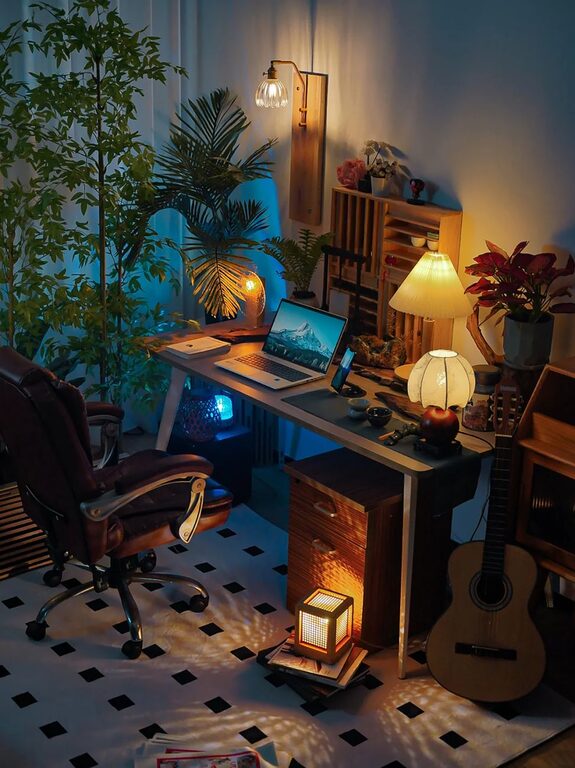
Adding warmth and comfort to your workspace makes it inviting and can reduce stress during work hours.
– Soft textiles: Use cushions, a throw blanket, or a rug to add texture and warmth.
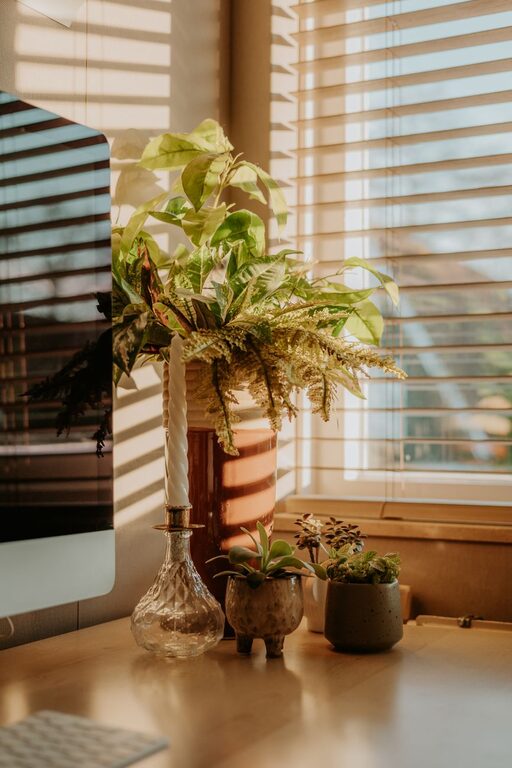
– Personal touches: Decorate with photos, artwork, or plants to make the space uniquely yours.
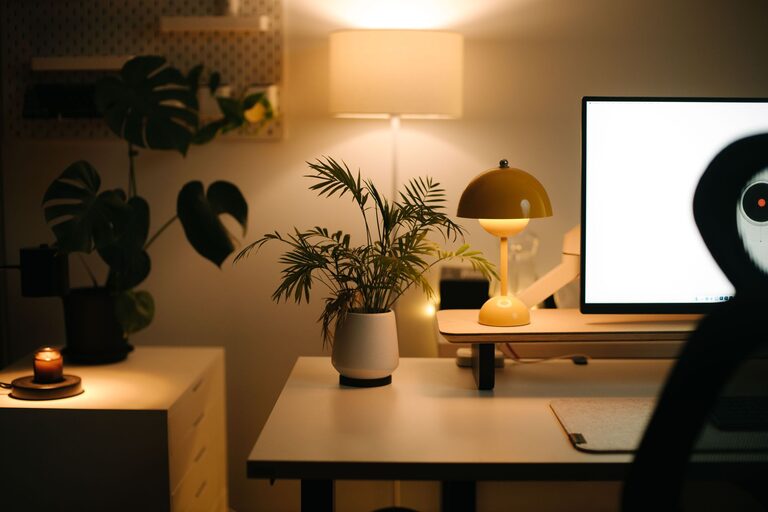
– Lighting: Besides natural light, add a warm desk lamp or string lights for a relaxing atmosphere.
Optimize Lighting
Good lighting is vital to reduce eye strain and maintain focus.
– Layered lighting: Combine ambient, task, and accent lighting.
– Adjustable desk lamp: Use a lamp with adjustable brightness and color temperature.
– Avoid glare: Position your screen and light sources to avoid reflections on your monitor.
Create a Routine and Boundaries
Even with the best setup, maintaining productivity requires routines and clear boundaries.
– Set working hours: Establish a consistent schedule to separate work from personal time.
– Designate workspace use: Use the space only for work to build mental associations with productivity.
– Take regular breaks: Incorporate short breaks to stretch or refresh your mind.
Add Greenery for Freshness
Plants not only improve air quality but also have a calming effect that can boost creativity.
– Low-maintenance plants: Succulents, snake plants, or pothos are easy to care for.
– Placement tips: Position plants where they get adequate light without cluttering your desk.
Embrace Technology Wisely
Set up your technology to support your productivity without causing interruptions.
– Reliable internet: Ensure a strong internet connection for virtual meetings and research.
– Accessories: Use headphones with noise-canceling features and a quality webcam.
– Software tools: Utilize productivity apps and calendars to stay organized.
Keep It Flexible
Your home workspace should be adaptable to your changing needs.
– Modular furniture: Choose items that can be rearranged as needed.
– Multi-use spaces: Consider how your workspace can serve different purposes, such as a hobby area after work hours.
—
Final Thoughts
Designing a cozy and productive home workspace doesn’t require a large budget or dramatic renovations. By focusing on comfort, organization, natural light, and personal touches, you can create an environment that supports your work and well-being. Start small, observe how your space feels during your workday, and adjust it to best fit your routine and style. A thoughtfully crafted workspace can turn your home into a place where productivity and comfort go hand in hand.

Related Posts